Planetary Periods (Dasha System): How They Shape Your Life

The concept of planetary periods lies at the heart of one of the most profound predictive tools in Vedic astrology: the dasha system. From your birth until significant transitions in your life, these planetary periods offer a framework for understanding when and how key themes of your life will unfold. If you have ever wondered why certain chapters of your life feel markedly different: intense, productive, calm, transformational, the planetary periods may hold the answer. In this comprehensive guide we will explore what the dasha system is, how it works, how the planetary periods influence your life journey, and how you can work with them consciously.

What Are Planetary Periods and Why They Matter

Defining planetary periods

In the traditional Vedic system, planetary periods refer to specific stretches of time during which the influence of a particular planet is heightened in an individual’s life. According to Vedic astrologers, the planets (or grahas) in your natal chart always influence you, but during a given planetary period, the “ruler” planet of that period becomes more active, its themes more prominent.

Introducing the dasha system

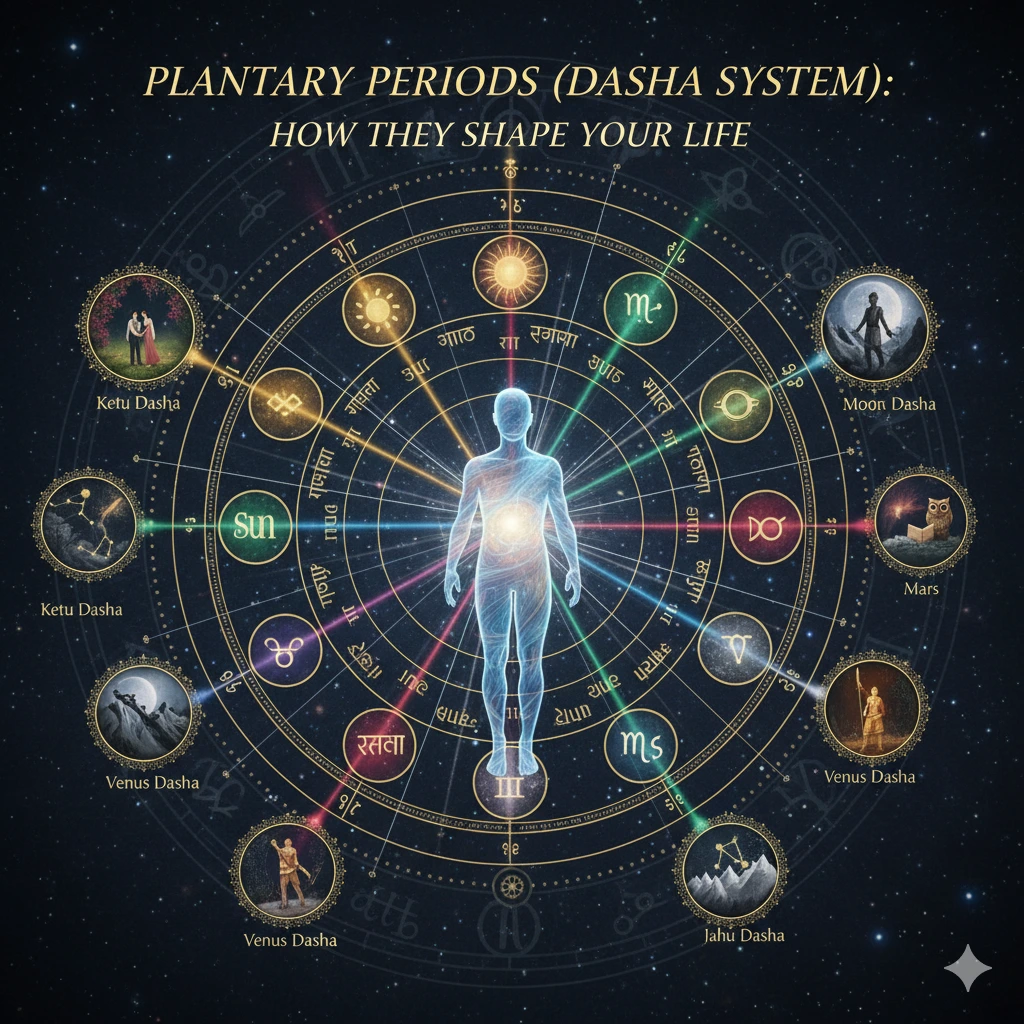
The dasha system is the method by which these planetary periods are allocated and sequenced. Among several systems, the most widely used is the Vimshottari Dasha system which divides a theoretical lifespan (120 years) into nine major planetary periods, each ruled by one of the nine key “planets” (including the nodes).
When you realise that your life is structured into these chunks of time, each ruled by a planet, you begin to appreciate how the cosmic rhythm might be interacting with your personal journey.

Why planetary periods matter

Understanding the planetary periods gives you the gift of timing. You can recognise that:

  • certain planets will take the lead during specific phases of your life
  • the themes associated with those planets will likely dominate that period
  • you can prepare for or consciously work with the energy of that planet rather than feel at its mercy

In other words, rather than asking only what will happen, you ask when and how, and you gain a measure of agency.

Click Here To Book Appointment With Acharya Sakshi Sanjeev Thakur

The Mechanics of the Dasha System

How the sequence begins

In the Vimshottari dasha system, the starting planetary period (Mahadasha) is determined by the placement of the Moon in a natal chart, specifically which lunar mansions (Nakshatras) the Moon occupies at birth. The ruling planet of that Nakshatra becomes the first in the planetary periods sequence for that individual.

The durations of each planetary period

Each major planetary period (Mahadasha) in the Vimshottari cycle has a fixed duration:

  • Ketu: 7 years
  • Venus: 20 years
  • Sun: 6 years
  • Moon: 10 years
  • Mars: 7 years
  • Rahu: 18 years
  • Jupiter: 16 years
  • Saturn: 19 years

Mercury: 17 years
These durations sum to 120 years, hence the term “Vimshottari” meaning “120”.

Sub-periods: Antardasha and beyond

Within each major planetary period there are sub-periods (Antardashas) which refine the effect of the main planet by bringing in the influence of other planets working within that major period.
These finer divisions mean you can identify not just which planet is ruling but which sub-theme is active at a given moment, giving deeper nuance to timing.

Chart factors that modulate the planetary periods

It’s important to emphasise that the mere fact of being in a planetary period doesn’t guarantee identical outcomes for everyone. The effect depends on:

  • the strength of the ruling planet in the natal chart (its sign, house, aspects)
  • the nature of the sub-period planet (Antardasha) interacting with the main period planet
  • the overall health of the birth chart (karma, planetary placements, other predictive factors)

Thus two people might be in the same planetary period but experience very different life themes.

How Planetary Periods Shape Your Life Journey

Activation of themes

When you enter a new planetary period the areas of your life governed by that planet become more active. For example:

  • If you are entering a Venus period you may find the themes of relationships, love, beauty, comfort rising up. Realties of your environment may shift in alignment with Venus-energies.
  • If you are in a Saturn period you may be led into areas requiring patience, hard work, discipline, long-term effort. Challenges may appear but so do opportunities for maturation.
Life stages mapped by planetary periods

In a very broad sense, these planetary periods can be thought of as “chapters” of life, each with a distinct flavour:

  • Early life often governed by earlier planetary periods brings foundational experiences.
  • Middle life may bring the more extended planetary periods (for example Venus’s 20 years or Rahu’s 18 years) where major life themes take root.
  • Later periods may emphasise culmination, reflection, spiritual maturity depending on the chart.
Conscious alignment with your planetary period

Once you are aware of which planetary period you are in, you can take steps such as:

  • focusing on the themes of the ruling planet rather than resisting them
  • using the active planet’s energy to your advantage (for example cultivating skills, relationships, environments aligned to the planet)
  • being mindful of possible challenges associated with that planet’s “less favourable” side
  • planning for important moves (career shifts, education, relationships) when energy is aligned.
Example scenarios
  • During a Jupiter period a person may experience growth, educational advancement, spiritual expansion. Conversely if Jupiter is weak they may face issues around excess, mis-directed growth.
  • During a Rahu period, unconventional paths, sudden changes, intense desire for material or experiential novelty may dominate. The challenge may be restlessness or illusion.
  • During a Moon period, emotional patterns, family life, nurturing, internal growth become prominent.
Timing and transitions

Because planetary periods have fixed durations, transitions between them often mark turning points in life. Being alert to a shift from one period to the next enables you to act consciously: tie up loose ends in the old phase, prepare for the incoming one.

Click Here To Learn About Planets

Major Planetary Periods: A Closer Look

Here we briefly explore each of the nine major planetary periods in the Vimshottari dasha cycle and the themes associated.

1. Ketu (7 years)

The Ketu period is often one of internalisation, detachment, transformation. It may prompt spiritual or psychological introspection, unexpected changes, letting go of old patterns. Because Ketu is a “shadow” planet (South Node) its results tend to be subtle, internal rather than outwardly flamboyant.

2. Venus (20 years)

Venus brings themes of love, beauty, comfort, creativity, relationships, material pleasures. A strong Venus can herald a period of harmony, social uplift, creative flourishing. If Venus is weak, one may face challenges in relationships, self-worth, indulgence or complacency.

3. Sun (6 years)

The Sun period is about self-expression, authority, leadership, vitality. It may be a time when you step into a more visible role, assume responsibility, assert yourself. On the flip side it may challenge ego, pride, health, identity.

4. Moon (10 years)

The Moon period emphasises the emotional world, family and home life, internal moods, mental wellbeing. It is a time when inner growth, nurturing relationships, sensitivity, intuition are in focus. If the Moon is afflicted challenges in emotional stability or family matters may arise.

5. Mars (7 years)

Mars brings action, courage, assertiveness, drive, conflict, energy. In a Mars period your life may accelerate, you may take on bold challenges, encounter physical or competitive situations. If Mars is weak, rashness or aggression may cause issues.

6. Rahu (18 years)

The Rahu period is often revolutionary, unconventional, unpredictable, intense. It may bring sudden changes, material ambition, foreign influences, technological shifts. But its shadow side may be illusions, obsession, crisis of identity.

7. Jupiter (16 years)

Jupiter stands for wisdom, growth, expansion, higher learning, spirituality, ethics. In its period you may grow broadly, educationally, spiritually, socially. If Jupiter is poorly placed you may face challenges in beliefs, over-expansion, ethical lapses.

8. Saturn (19 years)

Saturn’s period often signifies maturity, responsibility, diligence, perseverance, karmic lessons. Life may slow, but build depth and strength. If Saturn is afflicted it may bring delays, burdens, restrictions. But its rewards are long-lasting.

9. Mercury (17 years)

Mercury rules communication, intellect, adaptability, commerce, learning. In a Mercury period you may refine your mind, sharpen skills, network, trade, travel. If Mercury is weak you may encounter miscommunication, confusion, scattered focus.

How to Interpret Your Own Planetary Periods

Step 1: Determine your current planetary period

To find which planetary period you are in you must know: the degree of the Moon at birth, the Nakshatra it occupies, and the sequence of the planetary periods from that starting point. Many calculators online simplify this for you. 

Step 2: Assess the chart position of the ruling planet

Look at the natal chart and ask: how well placed is the planet whose period you are in? What sign, house, aspects, conjunctions? Is it strong (benefic), weak (malefic), or mixed? These modulate the planetary period’s effect. 

Step 3: Look at current sub-periods (Antardashas)

Within your major planetary period also identify the sub-periods: a second planet gets activated under the main one. That blends their energies and refines focus. This explains why within a long period you may still see shifts of themes.

Step 4: Consider external factors and personal response

Remember planetary periods don’t act in isolation. Transits, personal decisions, free will, and chart karma all interact. Recognising a period’s energy is helpful, but your conscious actions shape how the period plays out.

Step 5: Work consciously with the energy

Instead of resisting the themes of the ruling planet:

  • If you’re in a Venus period: use it for relationship building, aesthetic refinement, creativity.
  • If you’re in a Saturn period: embrace discipline, focus on long-term goals, build foundations.
  • If you’re in a Rahu period: explore new directions, break patterns, but watch illusions.

By aligning with the energy rather than fighting it you gain more flow and fewer unnecessary struggles.

Common Misconceptions & Clarifications

A planetary period is not purely “good” or “bad”

Often people fear or await “bad” dashas. But every planetary period brings both opportunity and challenge. The outcome depends on how you engage with its energy, your chart context, and your choices. 

You don’t necessarily experience all planetary periods

Because the standard cycle is 120 years and average human lifespan is shorter, many people will not live through all nine major periods. 

The period doesn’t mean the planet disappears afterwards

A planetary period ending doesn’t mean the planet’s influence vanishes, it simply means that planet’s role shifts. The planetary energies are continuous; the dasha is one way to map them. 

Timing is approximate, not deterministic

While dasha gives timing pointers, it does not rigidly determine every event. There is room for free will and external causes. Think of it as a template rather than a strict schedule.

Practical Tips for Working with Your Planetary Periods

Awareness is key

Start by identifying which planetary period you are currently in. Reflect on whether the themes of that planet have been prominent. This brings self-awareness and helps you recognise “why now?” in your life.

Set aligned goals

If you recognise the major planetary period of Venus, plan for relationship growth, creative ventures, beautification, aesthetic improvements. If in Saturn, consider commitments, serious responsibility, maturity, building for the long term.

Use remedial and supportive practices

In traditional Vedic astrology, remedial suggestions (mantras, gemstones, charity, puja) may be given to support weaker planetary periods. Even non-astrologers can use simple alignment: meditation, reflection, journaling, conscious choice.

Mid-period check-in

Within a long period, remember the Antardasha shifts. So periodically reflect: what sub-period am I in? What smaller themes are rising? This helps you fine-tune your actions.

Transition management

When you approach the ending of one planetary period and entering the next, consider both wrapping up the major themes of the old period and preparing for the upcoming one. Think of it as a handover-phase in life.

Combine with other tools

Use planetary period insight alongside other astrology tools (transits, house/lordship readings), but treat it as one piece of the puzzle rather than the whole story.

Real Life Implications and Case Insights

Let’s imagine a few stylised scenarios to illustrate:

  • Scenario A: A person enters their Venus period (20 years). They feel drawn to deepen relationships, invest in artistic hobbies and lifestyle upgrades. On introspection they realise past 3-4 years they were building finances; now Venus invites enjoyment and aesthetic refinement. If Venus is well placed, this phase can bring love, partnership, abundance; if weaker, it may highlight over-indulgence or superficiality.
  • Scenario B: After Venus they shift into a Sun period (6 years). Suddenly authority, ambition, self-expression, leadership issues come into focus. They may launch a business, take a management role, or fight for recognition. They may also face ego conflicts or health issues if Sun is challenged.
  • Scenario C: Someone in a Saturn period (19 years) may experience work stresses, responsibilities, delays. But if they lean into the energy they build lasting structures, maturity, resilience. This is not necessarily negative, it often yields the master-class of life.

These examples show how recognition of the planetary periods gives narrative and meaning to what might otherwise feel like random ups and downs.

Integrating Planetary Period Awareness into Life Planning

Career and business

If you know you are entering a planetary period ruled by Mercury (17 years), this is a good time to invest in communication, learning, travel, commerce. If you are about to start a Saturn period, building solid foundations rather than rapid change may be more aligned.

Relationships and marriage

Certain planetary periods may support partnership more than others (Venus, Moon, Jupiter). Being conscious of that helps you choose when to initiate commitment, or when to focus on personal growth before tying in.

Financial and material life

Plan major investments or lifestyle shifts in alignment with favourable planetary periods for those themes. For example Venus or Jupiter periods might enhance expansion; Saturn periods may advise caution and consolidation.

Spiritual and inner growth

Periods such as Ketu, Jupiter often bring inwardness, spiritual quest, philosophical growth. Recognising it helps you dedicate energy to inner work rather than only external achievement.

Summary: The Take-Away on Planetary Periods (Dasha System)

To summarise:

  • Planetary periods are key phases in your life when particular planetary energies dominate.
  • The dasha system (especially Vimshottari) divides life into these major planetary periods plus sub-periods.
  • Understanding which planetary period you are in allows you to align with its themes consciously.
  • The effect of a planetary period depends on the ruling planet’s condition in your birth chart and the sub-periods involved.
  • Recognising transitions, aligning choices, and planning in harmony with your planetary period gives you greater flow and reduces friction.
  • It is not deterministic in isolation: you still have choice, and other astrological and personal factors matter.

Final Thoughts

In many ways, life can feel chaotic, unexpected challenges, unexplained growth spurts, out-of-nowhere opportunities. The system of planetary periods offers a way of seeing the pattern within that apparent chaos. When you understand that your life is divided into segments ruled by planetary energies, and you know which segment you are in, you can respond rather than react. You can ask: What themes is this period asking of me? What qualities should I be cultivating?
In that way the planetary periods become not a constraint but a cosmic invitation, an encouragement to align with the rhythm of the sky and participate more consciously in your unfolding. The dasha system is not about fatalism. It is about timing, awareness, alignment and choice.
May you harness the power of your planetary period with insight and purpose.

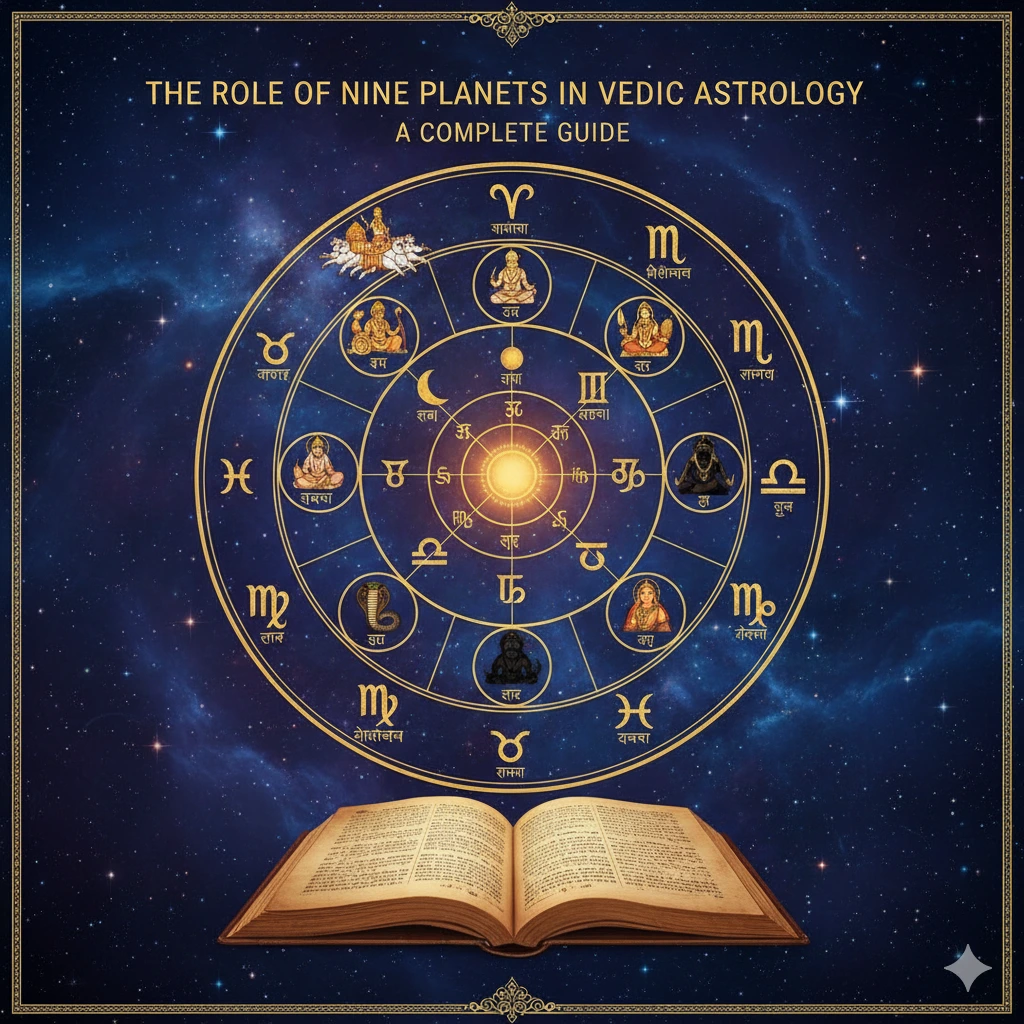
The Role of Nine Planets in Vedic Astrology: A Complete Guide

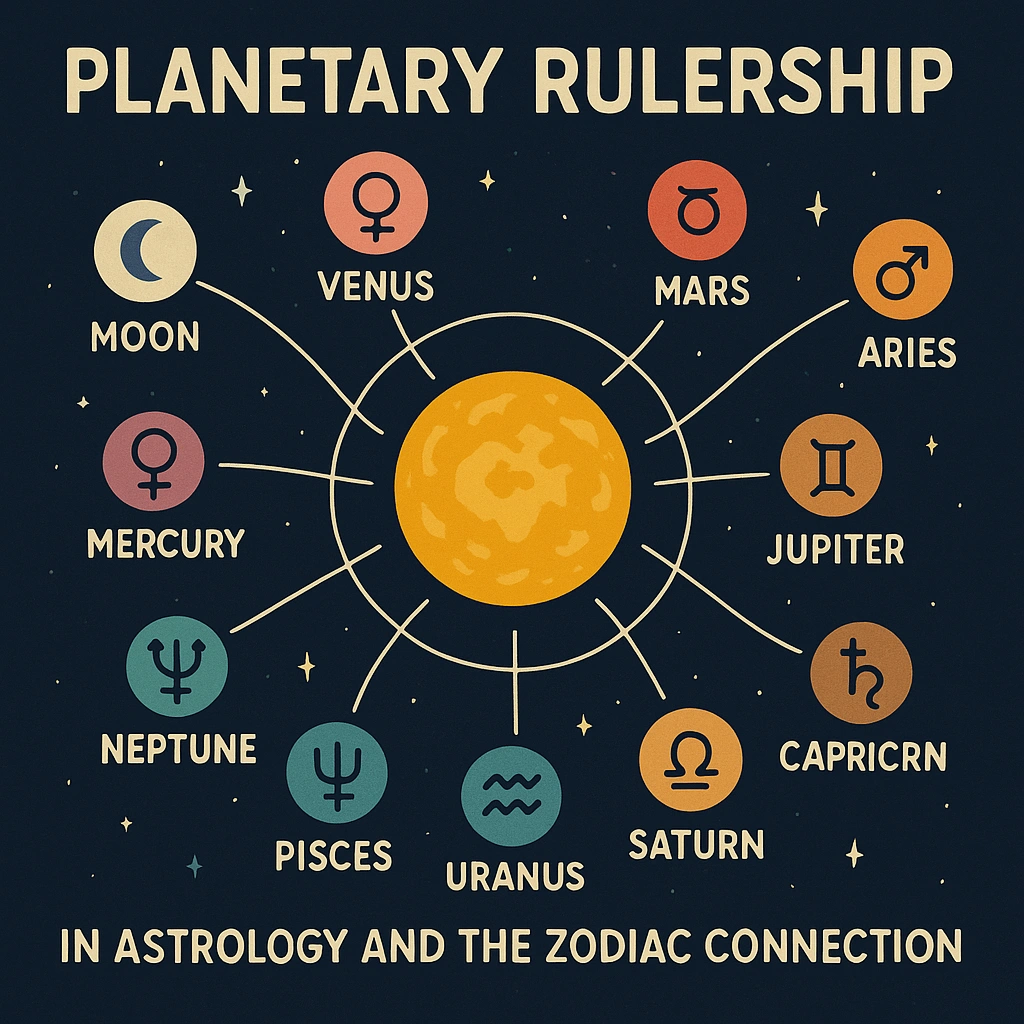
When we speak of the nine planets in Vedic astrology we refer to the group of celestial forces called the Navagraha, comprising the Sun, Moon, Mars, Mercury, Jupiter, Venus, Saturn, Rahu and Ketu. These are not merely astronomical bodies in the Vedic tradition but symbolic processors of life energy, karma, psychology and spiritual growth. Each planet embodies specific qualities, rules certain signs and houses, and exerts its influence depending on its placement in an individual’s chart. 

Understanding the role of nine planets in Vedic astrology enables you to interpret your birth chart more profoundly, to recognize the themes of your life, and to work with planetary energies rather than be passively shaped by them.

What Are the Nine Planets in Vedic Astrology?

To begin, let us list the nine planets in Vedic astrology and summarise their essential symbolic meaning:

  • Sun (Surya):  the self, ego, vitality, leadership. 
  • Moon (Chandra):  emotions, intuition, mind, nurturing.
  • Mars (Mangala):  action, energy, courage, drive. 
  • Mercury (Budha): intellect, communication, adaptability.
  • Jupiter (Guru or Brihaspati): wisdom, expansion, ethics, growth. 
  • Venus (Shukra): love, beauty, relationship, harmony.
  • Saturn (Shani): discipline, restrictions, karma, long-term results.
  • Rahu: the north lunar node, illusions, worldly desires, karmic crossroads.
  • Ketu: the south lunar node, detachment, spirituality, past karmic residue.

Each of these “planets” in Vedic astrology draws our attention to a different dimension of the human psyche and life journey. They are called graha meaning “that which seizes or influences”.

Why the Focus on the Nine Planets?

The role of nine planets in Vedic astrology is crucial because these planetary forces are believed to shape our personality patterns, life events and existential lessons. As one source puts it: “Vedic astrologers state that these celestial bodies can impact our personality, career, relationships, and even our health.” 

Here are some reasons why the nine planets matter:

  • They represent archetypal energies that express through our chart.
  • The placement of each planet in a zodiac sign and house gives clues to how that energy manifests.
  • Transits and periods related to these planets trigger phases of change and growth.
  • They provide a map of karmic opportunities and challenges.

The Individual Planets: Detailed Roles

Let’s explore each of the nine planets in Vedic astrology one by one, their core significations, lived expressions, and how they show up in a birth chart.

Sun (Surya)

The Sun is the centre of our solar system and in Vedic astrology it stands for one’s core identity, will, vitality and leadership. Its positive placement indicates strength, self-confidence and clarity of purpose. A weak or afflicted Sun may reflect ego struggles, lack of direction or vitality issues. 

In the birth chart the Sun defines how one expresses authority, how one asserts oneself, and the path to become Self-actualized.

Moon (Chandra)

The Moon rules the mind, emotions, instincts, habits and inner world. A strong Moon lends emotional stability, intuitive ability and nurturing qualities. A disturbed Moon can bring moodiness, emotional insecurity or unconscious patterns. 

In Vedic astrology the Moon also governs the way we receive, process and respond to life.

Mars (Mangala)

Mars provides the warrior energy, courage, drive, assertion and the ability to act. It is the planet of passion, ambition and dynamic force. When well-placed it gives strength, initiative and success through effort. When afflicted it may bring aggression, impulsiveness or conflict. 

Mercury (Budha)

Mercury governs intellect, logic, language, writing, adaptability, learning and communication. A strong Mercury supports analytical skills, business acumen and flexibility. On the other hand, a weak Mercury may reveal scatter-mindedness, indecision or difficulty with expression. 

Jupiter (Guru/Brihaspati)

Jupiter is considered the guru among planets. It symbolizes wisdom, ethics, expansion, mentorship, higher learning, fortune and sense of purpose. When strong it brings growth, opportunity, spiritual insight and prosperity. When weak or afflicted it can manifest as over‐optimism, lack of discipline or wasted potential. 

Venus (Shukra)

Venus is about love, beauty, aesthetics, relationships, art, pleasures, comfort, refinement and harmony. A well-placed Venus gives charm, social grace, romance and artistic ability. A challenged Venus may show relationship issues, over-indulgence or lack of enjoyment. 

Saturn (Shani)

Saturn is the heavy lifter among planets. It stands for discipline, responsibility, time, karma, delays, structure, maturity and long-term results. When Saturn is strong and well used it brings mastery, perseverance, humility and authority. When misused or blocked it results in fear, restriction, frustration, stagnation or harsh lessons. 

Rahu (North Node)

Rahu is not a physical planet but a lunar node, the point where the Moon’s path intersects the ecliptic (ascending node). It represents material desires, illusions, obsessions, unconventional paths and karmic turning points. It is ambitious, restless, inclined to breakthrough and ‘foreign’ or unusual themes. 

Ketu (South Node)

Ketu is the opposite lunar node (descending node). It signifies detachment, spirituality, past karmic baggage, mysticism, letting go, enlightenment as well as setbacks that force inner growth. It often indicates where we have already mastered something in past lives and where we need to release.

How the Nine Planets Influence Different Life Areas

The role of nine planets in Vedic astrology extends to various domains of human life such as personality, career, relationships, health, wealth, and spiritual evolution. Let’s look at how this plays out.

Personality & Inner Patterns

The position of each planet in the zodiac sign and in a natal house reveals how its energy expresses in personality and habitual patterns. For example, a strong Moon might give one emotional intelligence and nurturing ability; a weak Saturn might indicate fear of authority or difficulty with structure. Recognizing these patterns allows for conscious transformation.

Career & Profession

Planets reveal our vocational inclinations. A well-placed Mercury might favour writing or communication, Mars might favour engineering or military service, Venus artistic fields or luxury industries, Saturn mature fields like management or public service, Jupiter education or law, Rahu technology or foreign domains, Ketu research or spirituality.

Relationships & Marriage

Venus, Moon and Mars are key in relationships but other planets matter too. For example Saturn in the 7th house might indicate a late marriage or disciplined partner; Rahu in the 7th may show unconventional relationships or foreign partner. Understanding planetary role helps navigate relationship dynamics.

Health & Well-being

Each planet governs physical and psychological functions. A weak Sun may indicate vitality issues; Mars may govern blood or muscular system; Moon the mind or digestive system. Knowing the planet’s role helps in remedial practice such as lifestyle adjustments, gemstone therapies or mantra work. 

Karma, Growth & Spiritual Evolution

The planets are not just about the material but also about spiritual growth. Saturn teaches discipline and maturity; Ketu teaches detachment; Jupiter higher purpose; Rahu transformation. Recognizing the role of nine planets gives us insight into life’s lessons, karmic tasks and evolution path.

Planetary Strengths, Friendships and Enemies

To interpret the role of nine planets in Vedic astrology accurately one must also understand how planets behave in signs, how strong they are, their friendly/enemy relationships, exaltation, debilitation, etc.

  • Each planet has signs where it is comfortable and strong, and signs that are challenging.
  • Some planets are friendly with others, some are enemies, this affects conjunctions and aspects. 
  • Shadow planets (Rahu & Ketu) do not rule signs in the conventional sense but act in unique ways. 
  • For example: “Each planet emanates certain energy while moving through the zodiac circle. Some planets move faster.. these are called inner planets … outer planets move slowly … these planets … have a more profound and long-lasting impact.” 

By analyzing strength and placement, an astrologer gauges how well a planet will deliver its promise or challenge.

Transits, Dashas and The Role of Nine Planets

The nine planets in Vedic astrology act through multiple timing systems: transits (gochara), dasha (planetary period), antardasha (sub-period), and muhurtas (auspicious timings). Understanding these timing mechanisms gives important insight.

  • Transits: The movement of planets through signs and houses influences events. For example slow moving Saturn or Jupiter transits produce major life phases.
  • Dasha system (especially the Vimshottari Dasha) assigns each planet a time period of influence in a native’s life.
  • During its dasha, a planet becomes more prominent and the themes connected with it become noticeable.
  • By studying the dasha of the nine planets we learn when specific planet’s energy will dominate life, when remedies may be more effective, and when growth or challenge is likely.

This interplay underlines why the role of nine planets in Vedic astrology is not static but dynamic and evolving.

Click Here To Lean About Planets Online

Remedies and Balancing Planetary Energies

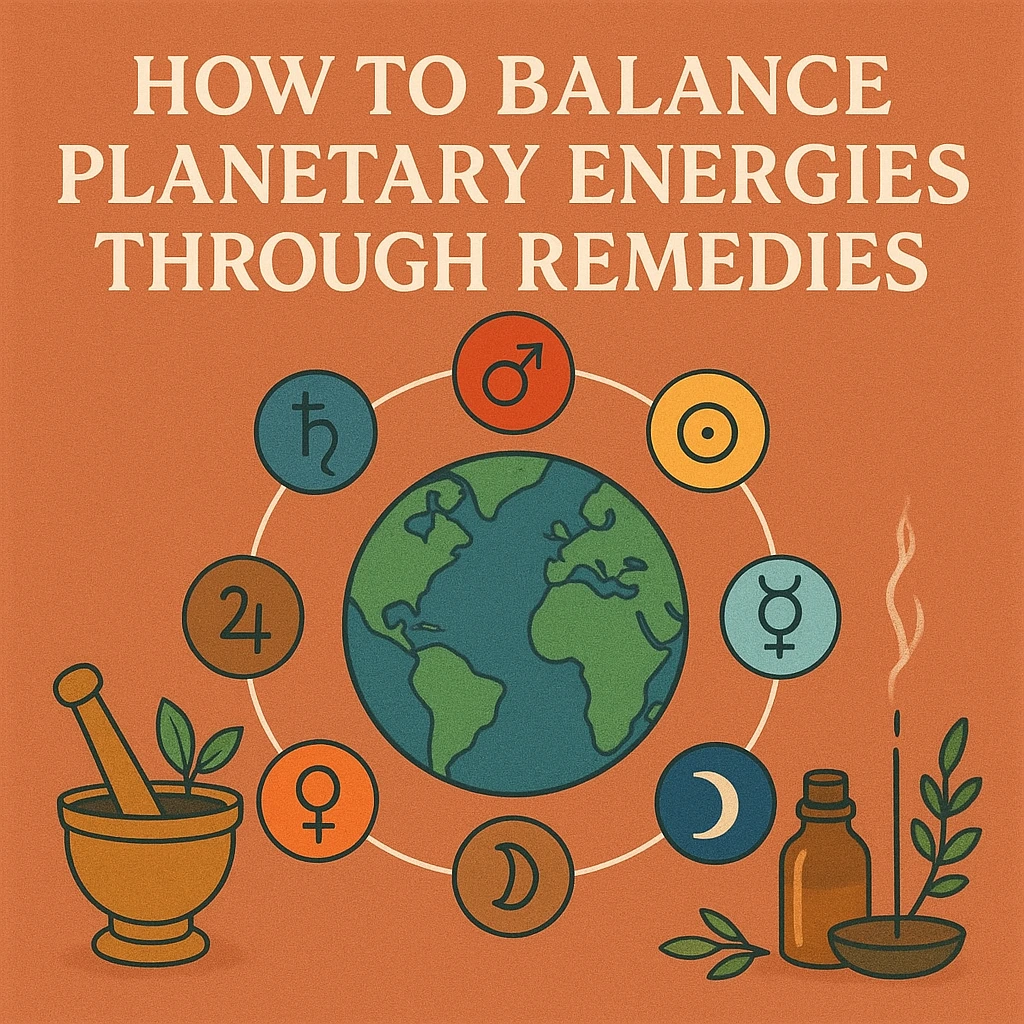
Since the nine planets in Vedic astrology can both support and challenge us, traditional Vedic astrology offers remedies to strengthen weak planets and mitigate harmful ones. Some common remedial measures:

  • Wearing gemstones associated with the planet (under guidance). 
  • Mantras, prayers, yantras and worship of planetary deities.
  • Charity, service and behaviour aligned with the planet’s energy (for example service for Saturn by helping the elderly, or supporting children for Jupiter).
  • Adjusting timing of important life events (muhurtas) according to favourable planetary periods.
  • Self-awareness work: consciously developing the positive traits of a planet and reducing the negative expression.

By doing this one does not attempt to “avoid fate” but rather to work consciously with the planetary energies of the nine planets in Vedic astrology.

Click Here To Book An Appointment With Acharya Sakshi Sanjeev Thakur

How to Use the Nine Planets in Your Chart Interpretation

Here is a simple outline of how you can interpret the role of nine planets in your own birth chart or in a client’s chart:

  1. Identify each planet’s sign and house placement.
  2. Check the dignity of the planet: Is it in its own sign, exalted, debilitated, in friendly or enemy sign?
  3. Assess aspects or conjunctions to that planet (which other planets influence it?).
  4. Determine the planet’s dasha or transit phase to see how it is acting currently.
  5. Ask: What life area does this planet govern for this person (house it occupies/lords)?
  6. Note the positive potential (what this planet can support) and the challenge (what it may obstruct).
  7. Recommend remedial actions or conscious work aligned with that planet’s energy.
  8. Encourage the native to cooperate with the planet’s lesson rather than fight it.

By following this process one can harness the full depth of the role of nine planets in Vedic astrology and apply it meaningfully.

Common Misconceptions About the Nine Planets

There are several misunderstandings about the nine planets in Vedic astrology that are worth clearing:

  • They are often interpreted as “good” or “bad” in an absolute way. In reality each planet has both constructive and destructive potential depending on placement, dignity and context.
  • People often focus only on outer events without appreciating the inner psychological process a planet is signalling. The planets reflect inner states as much as external circumstances.
  • Some believe Rahu and Ketu are irrelevant because they are “shadow” planets. In fact they are powerful karmic nodes and have very profound significance in Vedic astrology.
  • Remedies are often taken superficially (gemstone without chart context, prayers without understanding). Effective working with planetary energies requires awareness, sincerity and alignment with the chart.

Why the Role of Nine Planets in Vedic Astrology Matters in Modern Life

In our fast-changing world, the ancient wisdom of the nine planets in Vedic astrology continues to offer relevance and guidance. Here’s why:

  • It provides a framework to understand one’s personality, strengths, weaknesses and life themes.
  • It offers timing insights to know when key phases of life may unfold and when to act or wait.
  • It encourages conscious living: instead of just reacting to life, one can work with planetary energies, transform challenges into growth, and align with one’s purpose.
  • For practitioners of holistic wellbeing, the planet-map offers a bridge between astrology, psychology and spirituality.
  • It reminds us that life is multi-layered: the planets reflect not just what happens to us but how we respond internally, the lessons we are invited to learn, and the growth we can achieve.

Summary and Key Takeaways

To summarise the role of nine planets in Vedic astrology:

  • The nine planets in Vedic astrology are powerful archetypal forces that influence our life in many domains, personality, relationships, career, health, karma and evolution.
  • Each planet (Sun through Ketu) has a unique quality, ruling sign, houses and energy signature.
  • Understanding their placement, strength, aspects and timing (transits and dashas) is essential for chart interpretation.
  • Rather than seeing planets only as external forces, recognising them as inner energies enables deeper self-awareness and transformation.
  • Remedial practices grounded in awareness can help us work with planetary energies rather than be at their mercy.
  • Ultimately, the role of nine planets in Vedic astrology is to point us toward our growth, our life purpose and our path of becoming.

Final Thoughts

Studying the nine planets in Vedic astrology opens up a profound map of life. It invites you to look beyond superficial events and enter the realm of patterns, meaning, timing and inner growth. Whether you are a seeker of self-knowledge, an astrology student, or a practitioner, engaging with the nine planetary forces with respect, discernment and sincerity can deepen your journey.

May this guide serve as a complete companion to explore the role of nine planets in Vedic astrology. May you discover not just the “what” of planetary influence but the “how” and the “why”, and integrate this knowledge into your life with wisdom.

Thank you for reading.

Remedies for Weak Planets Without Expensive Rituals

Remedies for Weak Planets are often thought of as elaborate rituals, costly pujas, gemstone settings, and complex ceremonies. But many seekers worry: Is there a way to strengthen weak planets without spending a fortune or performing grand rituals? The answer is yes. In this blog, we will explore Weak Planet Remedies that are simple, practical, sustainable, and rooted in astrological tradition. You will learn how to Strengthen Weak Planets through daily habits, mindset changes, lifestyle adjustments, charity, mantra practice, selfless service, and other non-ritualistic techniques. We will explain why a planet may be weak, how gentle remedies help, and then look at specific planetary remedies (for Sun, Moon, Mars, Mercury, Jupiter, Venus, Saturn, Rahu, Ketu).

Throughout, we will emphasize remedies you can apply yourself, without needing expensive temple rituals, pujas, or high cost offerings.

Let us begin by understanding what it means for a planet to be weak in astrology and why a non-ritual approach can still yield positive change.

What Does It Mean When a Planet Is Weak?

In Vedic astrology (and also in various traditional systems), each planet in the birth chart has a certain “strength” determined by multiple factors. A planet may be considered weak due to:

  1. Debilitation / Fall Position: the planet is in a zodiac sign where its energy is naturally reduced.
  2. Conjunction or aspect of malefic planets: negative influences overshadow its positive qualities.
  3. Placement in unfavorable houses: houses like the 6th, 8th, or 12th (challenging houses) tend to reduce positive expression.
  4. Weak divisional charts (vargas): even if in a favorable sign in the main chart, a planet may be poorly placed in navamsa or other divisional charts.
  5. Lack of essential dignity: the planet may be in its enemy sign, or deprived of triplicity/term/face strength.
  6. Afflictions by conjunction, combustion, or eclipses: which diminish its effective power.

When a planet is weak, its positive functions (the life area it rules: health, communication, wealth, family, etc.) may operate suboptimally. You might feel stuck, face obstacles, deficiency, delay, or disharmony in those life aspects.

The idea of Remedies for Weak Planets is to strengthen or support that planet’s energy through various means, to improve its expression in your life, reduce negative fallout, and invite balance.

It is important to note that remedies are not magic fixes. They are supportive actions, adjustments, and patterns that can gradually shift subtle energies and your mindset. Consistency, sincerity, and patience are essential.

Why Use Non-Ritual Remedies?

Many people assume that to fix planetary weakness, one has to perform large scale temple rituals, homas, hire priests, or buy expensive gemstones. That is daunting or unaffordable to many. But the tradition also offers simpler remedies that anyone can practice:

  • Mindful habits and lifestyle alignment
  • Charity and seva (selfless service)
  • Mantra chanting, meditation, affirmations
  • Color and element resonance
  • Conscious diet, behavior, speech changes
  • Environmental and spatial adjustments

These approaches allow you to act as your own practitioner. You gain personal growth, self responsibility, and deeper inner awareness while gradually inviting planetary harmony. So in the next sections we present Weak Planet Remedies focused on non-ritual, accessible methods.

Foundations for All Weak Planet Remedies

Before diving into each planet, here are general guidelines you should follow to get the most out of your planetary remedies:

  1. Clarity on which planet(s) is weak
    It is best to consult an astrologer or use reliable software to know which planet(s) in your chart need support, so you can apply remedies in a targeted fashion.
  2. Consistency is key
    Small efforts done daily or regularly are more effective than grand efforts done sporadically.
  3. Intention and devotion
    The power of a remedy is magnified when you perform it with sincerity, faith, humility, and devotion.
  4. Self-improvement orientation
    Remedies should come from a mindset of inner growth, not bargaining or expecting instant miracles.
  5. Avoid harmful extremes
    Don’t force remedies, don’t adopt unhealthy austerities beyond your capacity. Moderation is safer.
  6. Combine methods
    Use a blend: mantra + charity + lifestyle adjustments + mental work. The synergy is powerful.
  7. Patience and time
    Results may emerge gradually. Avoid impatience or giving up too soon.

With these foundational principles, let us work through Non-ritual planetary remedies one planet at a time.

Click Here To Learn Astrology Online

Remedies for Weak Sun (Surya)

The Sun represents authority, self confidence, prestige, vitality, father, leadership, ego, health of eyes and bones, and willpower. A weak Sun can manifest as low self esteem, poor health, lack of recognition, struggles with authority or respect.

Gentle Remedies for a Weak Sun

  1. Surya Arghya (Water Offering at Sunrise)
    Face the rising sun early morning, offer water (in a copper or steel vessel if possible) with respect, and recite “Om Suryaya Namaha.” This simple act helps build your connection with Sun’s energy.
  2. Surya Namaskar / Sun Salutation Practice
    Consistently doing Surya Namaskar (yogic sun salutations) helps you embody the solar energy, strengthening your physical vitality and inner света (light).
  3. Affirmations / Self Affirming Statements
    Use declarations like: “I am confident, I stand in my power, I shine my light.” Repeat daily or when needed.
  4. Dress in Sun’s colors
    Wear shades of red, orange, gold, or ochre especially on Sundays or days you are focusing on Sun. This creates resonance.
  5. Serve and respect elders or mentors
    The Sun is linked with father, teacher, elders. Be respectful to seniors, serve them, listen to their wisdom.
  6. Charity dedications
    Donate red items, jaggery, bananas, or red clothes to someone in need, dedicated mentally to the strengthening of Sun.
  7. Avoid salt on Sundays
    Some traditions recommend minimizing salt intake on Sunday as a gesture of discipline toward Sun’s energy.
  8. Mantra chanting
    Recite “Om Suryaya Namaha” or the Gayatri Mantra with devotion. Over time the vibrational alignment helps.

These are all doable daily or weekly without expensive rituals or pujas.

Remedies for Weak Moon (Chandra)

The Moon governs mind, emotions, intuition, mental peace, nurture, sleep, mother, receptive sensitivity. A weak Moon leads to mood swings, emotional instability, poor sleep, lack of mental clarity.

Accessible Remedies for a Weak Moon

  1. Offer water, milk, or cool calm liquids
    On Mondays or especially full moon nights, offer a little water or milk (in silver or steel if possible) under moonlight, with a calm mental prayer.
  2. White colors and gentle ambiance
    Surround yourself with white clothes, sheets, curtains, soft lighting. This soothes lunar energy.
  3. Mantra for Moon
    Chant “Om Chandraya Namaha” or the Moon mantra 108 times or multiples thereof regularly.
  4. Gentle routines before bed
    Avoid screen use just before sleep. Read, meditate, sip warm milk or herbal tea. Create calmness in the mind.
  5. Fasting or light diet on Mondays
    Eat simple, pure meals (white rice, milk, sweet curd) on Monday, dedicating to Moon energy.
  6. Kindness, nurturing, care
    Take care of a pet, feed birds, nurture plants, offer water to animals. These acts reflect Moon’s nurturing nature.
  7. Affirmations / emotional journaling
    Use statements like “I feel calm, I trust my intuition, I honor my emotions.” Write feelings, release emotional tension.
  8. Moonlight exposure
    Spend quiet moments under moonlight (especially full moon evenings) just meditating, reflecting, connecting.

These help build emotional equilibrium and inner sensitivity.

Remedies for Weak Mars (Mangal)

Mars is about energy, courage, will, assertion, action, ambition, physical drive. A weak Mars can manifest as indecisiveness, low stamina, frustration, lack of direction.

Non Ritual Remedies for Weak Mars

  1. Physical activity and martial movement
    Regular exercise, especially active ones,  walking, martial arts, sports, help channel Mars energy healthily.
  2. Affirmations / action mindset
    “I act with courage. I commit. I move ahead fearlessly.” Use these statements before undertaking tasks.
  3. Warm shades (red, orange)
    Wear red or rust tones especially on Tuesdays or days you focus on Mars.
  4. Donate or serve in Mars-linked ways
    Donate red lentils, copper items, red cloth, or help in causes involving courage (firefighters, defense) mentally dedicated to strengthening your Mars.
  5. Mantra chanting
    Chant “Om Mangalaya Namaha” or the Mars bija mantra (if learned safely) with focus and energy.
  6. Herbal or Ayurvedic support
    Some traditions suggest bathing with water infused with herbs like asafetida (hing), jatamansi, etc (ensure safe use).
  7. Focus on disciplined action
    Set micro goals, commit to them, follow through. The internal strengthening of will helps the Mars resonate.
  8. Feeding creatures that signify Mars
    In certain traditions, feeding crows, or red items to animals is beneficial, if safe and done with devotion.

These are manageable within daily life without needing costly rituals.

Remedies for Weak Mercury (Budh)

Mercury governs intellect, communication, language, learning, adaptability. A weak Mercury can bring communication issues, lack of clarity, confusion, difficulty learning.

Practical Remedies for Weak Mercury

  1. Learning and study habits
    Pick a new language, write daily, read, practice mental puzzles or memory games — stimulate the intellectual faculty.
  2. Chant Mercury mantras
    Use “Om Budhaya Namaha” regularly to attune your vibrational field to Mercury.
  3. Green resonance
    Wear green clothing, keep green plants around, use green décor. Green energizes Mercury.
  4. Offer gifts or charity
    Donate green items or stationery, help children’s education, support learning programs, dedicated to Mercury’s uplift.
  5. Clean, organized environment
    Mercury energy thrives in clarity. Keep your workspace tidy, reduce clutter, streamline communications.
  6. Speak truthfully, clearly, with kindness
    Be mindful of words. Practice gentle, balanced speech. Mercury responds to purity of intention in communication.
  7. Avoid too much spicy or stimulating foods
    Eat moderate diet; include vegetables, herbs, mild foods that calm the mind.
  8. Affirmations
    “I express clearly. I learn effortlessly. My mind is sharp.” Use daily.

These support the mental faculties and strengthen Mercury energy without needing complex services.

Remedies for Weak Planets (Jupiter/Guru)

Jupiter symbolizes wisdom, spirituality, expansion, prosperity, higher learning, ethics, guidance. A weak Jupiter can lead to lack of purpose, moral confusion, blocked growth.

Gentle Remedies for Weak Jupiter

  1. Study spiritual or higher texts
    Read sacred books, philosophy, scriptures, expand your worldview.
  2. Offer yellow / gold resonance
    Wear yellow, saffron, ochre. Use yellow flowers or bananas for dedication.
  3. Charity and teaching
    Help students, donate books, sponsor education, volunteer in knowledge sharing, dedicated to Jupiter.
  4. Mantra chanting
    Chant “Om Gurave Namaha” or other Jupiter mantras with devotion.
  5. Mentorship and guidance
    Seek a mentor, guide someone younger, foster a teacher-student relationship. Jupiter energy flows in wisdom exchange.
  6. Ethical conduct, integrity, gratitude
    Live by high morals, thank your blessings, be generous. Jupiter honors virtue.
  7. Affirmations
    “I grow in wisdom. I serve higher purpose. I expand in abundance.”
  8. Diet and lifestyle
    Take a satvic diet, include light, fresh foods; avoid excessive indulgence. Practice humility and moderation.

These are powerful yet non-ritual ways to subtly strengthen Jupiter’s influence in your life.

Remedies for Weak Planets (Venus/Shukra)

Venus anchors love, beauty, relationships, comfort, luxury, harmony, art. A weak Venus may bring disharmony in relationships, lack of aesthetics, creative blocks, dissatisfaction.

Accessible Remedies for Weak Venus

  1. Cultivate beauty and harmony
    Decorate your space, bring fresh flowers, art, pleasant music. Surround yourself with beauty.
  2. Wear soft, bright clothing
    White, pastels, light tones resonate with Venus.
  3. Mantra chanting
    Chant “Om Shukraya Namaha” or a Venus bija mantra (if you know it).
  4. Charity in beauty / comfort
    Donate cosmetics, clothes, useful items to women or underprivileged people, with a pure heart.
  5. Acts of kindness, artistic service
    Offer music, dance, creative gifts, beauty in service to others without expectation.
  6. Refined enjoyment
    Savor good food in moderation, listen to classical or calming music, cultivate joy. But avoid excess.
  7. Affirmations
    “I attract beauty, I give love, I nurture harmony.”
  8. Cleanliness, grooming, refined habits
    Groom yourself, keep surroundings neat, smell pleasant (use mild fragrance).

These build Venus energy from the inside and reflect outwardly.

Remedies for Weak Planets (Saturn/Shani)

Saturn deals with discipline, karma, patience, maturity, responsibility, limitation. A weak Saturn can manifest as lack of focus, laziness, chronic delays, instability.

Non Ritual Remedies for Weak Saturn

  1. Consistent discipline
    Develop a daily schedule, follow chores, respect time. Discipline is Saturn’s language.
  2. Service to the elderly / labor
    Volunteer for disciplined work, help in tasks, care for elders. Service humbly and steadily.
  3. Colors and materials
    Wear blue, black, or steel tones; use iron or steel utensils where possible.
  4. Charity and support
    Donate iron items, black cloth, sesame seeds, feed the needy, contribute to welfare causes.
  5. Mantra chanting
    Chant “Om Shanicharaya Namaha” with focus and patience.
  6. Acceptance, patience, responsibility mindset
    Embrace trials as lessons, avoid quick shortcuts, develop long term endurance.
  7. Affirmations
    “I build steadily. I persist with purpose. I accept responsibility.”
  8. Avoid idleness
    Keep busy, don’t procrastinate. Saturn rewards steadfast effort.

These remedies gradually evolve maturity and stabilize the influence of Saturn.

Remedies for Weak Planets (Rahu and Ketu)

Non Ritual Remedies for Rahu

  1. Mantra practice / meditation
    Recite “Om Rahave Namaha” or Rahu mantras, with attention to clarity and discernment.
  2. Charity with blue or dark items
    Donate blue cloth, coconuts, black sesame, or dark items devoted to reducing Rahu’s negative surge.
  3. Resist illusions, self reflection
    Be mindful of obsession, addictive patterns, illusions. Practice discipline and introspection.
  4. Service to marginalized groups
    Give help to those often ignored, underprivileged — service dedicated to balancing Rahu’s extremes.
  5. Use camphor / incense (safe)
    Light mild incense, maintain smoke in corners as symbolic purification (if safe in your home).
  6. Keep your home and mind clean
    Declutter mental and physical spaces, let go of unnecessary attachments.

Non Ritual Remedies for Ketu

  1. Meditation, spiritual practices
    Spend silent time, contemplative practices, mantra chanting, letting the ego rest.
  2. Service of humility
    Help in humble tasks (cleaning, simple help) as an act of letting ego dissolve.
  3. Charity in simple forms
    Donate blankets, brown / neutral items, grains, in devotion to Ketu balance.
  4. Study spiritual teachings
    Read teachings about nonattachment, scriptures, philosophy.
  5. Affirmations / surrender mindset
    “I release attachment. I trust the cosmic plan. I surrender what I cannot control.”

When used judiciously, these remedies help integrate the deeper lessons of Rahu/Ketu with balance.

Click Here To Book Appointment With Acharya Sakshi Sanjeev Thakur

How to Adopt and Sustain These Remedies

  1. Select just a few remedies initially
    Don’t overwhelm yourself. Choose 2-3 remedies per weak planet and stick to them consistently.
  2. Set a schedule
    Allocate fixed time daily or weekly for mantra, meditation, charity, affirmations, etc.
  3. Journal progress
    Write your experiences, subtle shifts, challenges. This helps you keep faith and track growth.
  4. Be flexible and honest
    If a remedy feels negative or harmful, stop it. Use only what resonates with you ethically.
  5. Gradually increase gently
    As you gain confidence and benefit, you can add more remedies.
  6. Integrate into daily life
    Let these practices become part of your lifestyle rather than extra burdens.
  7. Avoid comparison / expectations
    Each person’s chart and timing differ. Trust your path and pace.
  8. Maintain humility and gratitude
    The inner attitude of service and humility multiplies the potency of all remedies.

Case Illustrations and Example Applications

Let us consider a few hypothetical illustrations of how one might adopt these Weak Planet Remedies in daily life:

Example 1: Weak Sun + Weak Mercury
  • Morning: Offer water to sunrise, recite “Om Suryaya Namaha”
  • Midday: Wear red or golden outfit, use affirmations of confidence
  • Afternoon: Read or write something, engage in study to stimulate Mercury
  • Evening: Chant “Om Budhaya Namaha” 108 times before sleep
  • Weekly: Donate red cloth and stationery to needy students

Over months, your confidence, clarity, self expression may strengthen as the solar and mercurial energies find greater harmony.

Example 2: Weak Moon + Weak Saturn
  • Evening: Calm bedtime routine, avoid screens, recite Moon mantra
  • Weekly: Serve in disciplined tasks (gardening, helping elders)
  • Dress in soft white for Moon, and wear dark or disciplined tones for Saturn
  • Keep a fixed daily schedule, honor rest times
  • Donate milk, white cloth, and iron utensils to people in need

This balanced integration nurtures emotional stability (Moon) and steadfast structure (Saturn).

Why These Remedies For Weak Planets Can Work (Subtle Principles)

While there is no guarantee of immediate effects, the following subtle principles explain why these non-ritual remedies often help:

  • Resonance principle: Colors, mantras, herbs, actions create vibrational alignment with planetary energies.
  • Karmic reinforcement: Charity and service modify karmic currents, gradually softening negative results.
  • Neuroplastic shifts: New habits, affirmations, mindset changes rewire your psyche and behavior.
  • Energy purification: Selfless actions and internal purity reduce obstructions that hinder planetary flow.
  • Synergy with chart: Remedies bring the weak planet into better balance with neighboring planets, reducing friction.

Thus even without grand rituals, these practices gradually shift your energy field, strengthen weak planetary aspects, and evoke internal harmony.

Precautions, Warnings, and Best Practices

  • Avoid overdoing remedies, especially if your body or mind is weak.
  • Consult a qualified astrologer when dealing with gemstones or strong tantra mantras.
  • Never force harmful austerities or practices beyond your physical or mental capacity.
  • If you find negative emotional surges or discomfort, pause and reflect.
  • Remedies support not replace your life work, therapy, or material effort.
  • Stay rooted in humility and devotion, avoiding egoistic “power play.”