

Table of Contents
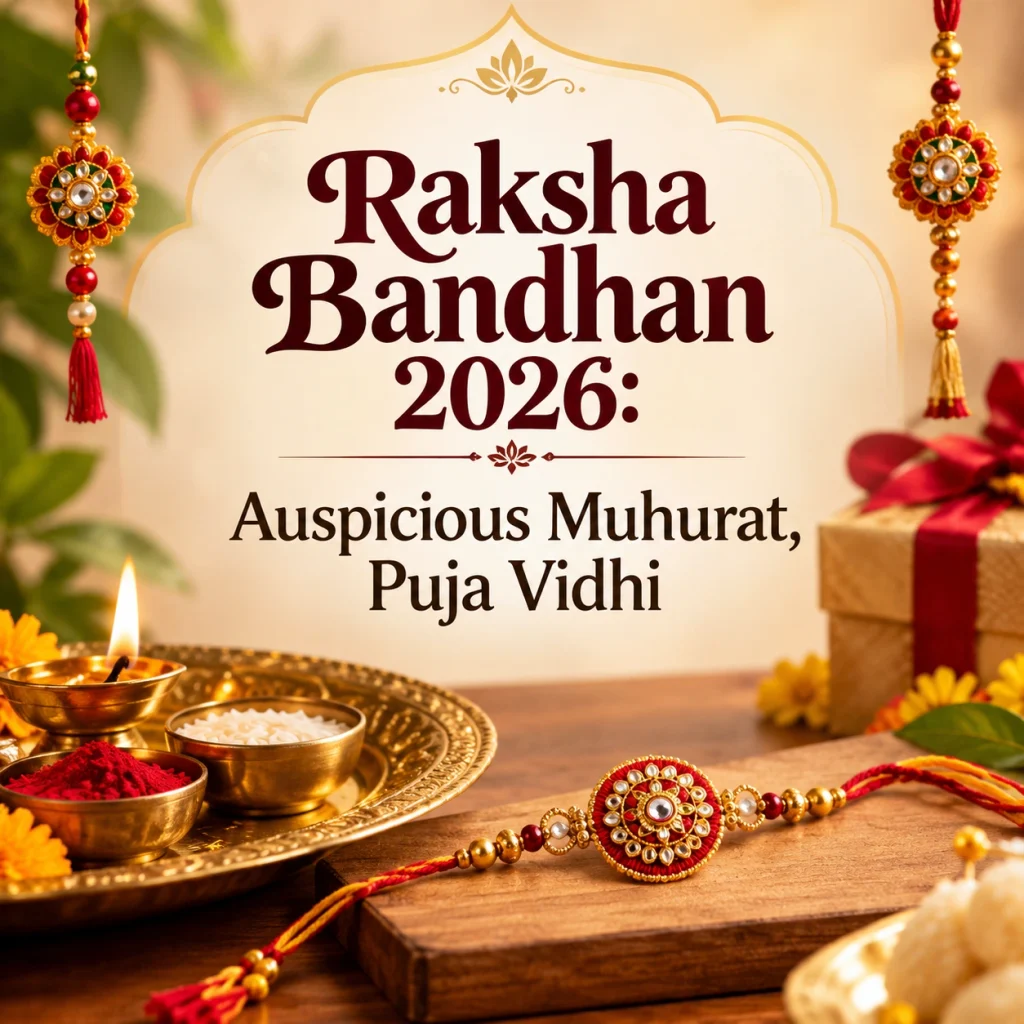
Raksha Bandhan 2026 is one of those festivals that Indian families wait for all year, because it is not just a ritual, it is a living symbol of the bond between a brother and a sister. If you are reading this because you want to celebrate Raksha Bandhan 2026 the right way, with the correct shubh muhurat, the correct puja vidhi, and a few powerful astrology remedies added on top, then you are in exactly the right place. This blog has been written for one purpose only, to explain everything from the very beginning, in the simplest possible language, so that even if you have never followed a single Hindu festival ritual before, by the end of this article you will understand Raksha Bandhan 2026 as well as someone who has been performing this puja for thirty years.
We are not going to assume you already know what “Purnima Tithi” means, or what “Bhadra Kaal” is, or why astrologers keep talking about “Rahu Kaal” before every festival. We will explain each of these terms the moment they appear, in plain language, with examples. By the time you finish reading, you will not only know the exact time to tie rakhi on your brother’s wrist in 2026, you will also understand why that time was chosen, what could go wrong if you ignore it, and how to add simple astrology remedies that many families quietly follow to make the bond of Raksha Bandhan even stronger.
What Is Raksha Bandhan? Understanding The Festival From Zero
Let’s start right at the beginning. The word “Raksha Bandhan” is made of two Sanskrit words. “Raksha” means protection, and “Bandhan” means a bond or a tie. Put together, Raksha Bandhan literally means “the bond of protection.” On this day, a sister ties a sacred thread, called a rakhi, around her brother’s wrist. This thread is not just a decorative bracelet. In Hindu tradition, it is believed to carry a promise inside it, a promise that the brother will protect his sister through every phase of life, and in return, the sister prays for her brother’s long life, good health, and happiness.
If you grew up outside this tradition, imagine it like this: think of a wedding ring, which is a small object that carries a very big emotional and social meaning far beyond its material value. A rakhi thread works the same way. It might cost only a few rupees, but the moment it is tied on the wrist, it becomes a symbol of a lifelong relationship of trust and protection.
Raksha Bandhan is celebrated every year on the full moon day (called Purnima) of the Hindu lunar month of Shravan, which usually falls in August. Because the Hindu calendar is based on the movement of the moon, the exact date shifts every year according to the Gregorian calendar that most of the world uses. That is exactly why people search for “Raksha Bandhan 2026 date” every single year, instead of the date simply being fixed like Christmas or New Year’s Day.
The festival is celebrated mainly across India and Nepal, but because of migration and the spread of Indian culture, families across the world now celebrate Raksha Bandhan 2026 as well, sometimes adjusting the ritual slightly to fit their location, but always keeping the core idea the same: sister ties the thread, brother promises protection, and love is renewed for another year.
Raksha Bandhan 2026 Date: When Is Rakhi This Year?
Now let’s answer the question you probably came here for first. Raksha Bandhan 2026 will be celebrated on Friday, 28th August 2026. This is the day when the Purnima Tithi (full moon date) of the Shravan month falls, and it is the day that Panchang experts and astrologers have confirmed as the correct day for tying rakhi this year.
Here is something interesting and genuinely good news for everyone celebrating Raksha Bandhan 2026: this year, there is no Bhadra Kaal falling on the day of the festival. We will explain in detail a little further down what Bhadra Kaal is and why it matters, but for now, just remember this one line, because it removes a huge amount of stress that families usually go through every year while trying to avoid an inauspicious window. In 2026, you do not need to worry about squeezing your rakhi ceremony into a narrow “safe” gap between Bhadra periods. The entire day is largely open, other than one small window we will explain below, which makes planning Raksha Bandhan 2026 far simpler than many previous years.
Understanding Purnima Tithi: Why The Date Of Raksha Bandhan Changes Every Year
To really understand Raksha Bandhan 2026, you need to understand one basic idea from Hindu astrology called “Tithi.” A Tithi is a lunar day. Unlike a normal calendar day, which always lasts exactly 24 hours, a Tithi is measured by the angle between the sun and the moon in the sky, and because of this, a Tithi can be shorter or longer than 24 hours, and it does not always start and end exactly at midnight.
For Raksha Bandhan 2026, the relevant Tithi is Purnima, the full moon day. According to the Panchang (the traditional Hindu astrological calendar) for this year, Purnima Tithi begins on 27th August 2026 at 9:08 in the morning, and it continues until 28th August 2026 at 9:48 in the morning. This is exactly why the festival is celebrated on 28th August, and not on 27th August, even though the Tithi technically starts on the 27th. The rule that Panchang experts follow is that the day on which the Purnima Tithi is present during the “Udaya,” meaning at sunrise, and covers most of the daytime hours, is treated as the main festival day. Since 28th August has Purnima Tithi present from midnight until almost 9:48 in the morning, and this is the day when the sunrise falls within the Tithi, 28th August 2026 is confirmed as the correct date to celebrate Raksha Bandhan.
This might feel a little technical if you have never studied the Panchang before, but here is the simplest way to remember it: the moon reaches its fullest, roundest shape late in the night between 27th and 28th August, and that fullness carries over into the morning hours of the 28th, which is why the 28th is your festival day.
Raksha Bandhan 2026 Shubh Muhurat: The Exact Auspicious Time To Tie Rakhi
This is the single most important practical section of this blog, so read it carefully. The term “Shubh Muhurat” simply means an auspicious, favourable window of time. In Vedic astrology, not every hour of the day is considered equally good for starting something important. Some hours are considered energetically supportive, and some hours are considered risky or obstructive. When you perform an important ritual like tying rakhi during a Shubh Muhurat, the belief is that the positive planetary energy of that time period blesses the action and the relationship it represents.
For Raksha Bandhan 2026, there are two Shubh Muhurat windows you can choose from, depending on what fits your family’s schedule.
The first and most recommended window is the morning Shubh Muhurat, which runs from 5 o’clock 57 minutes in the morning until 9 o’clock 48 minutes in the morning. This window is considered extremely auspicious because it lines up with the final hours of the Purnima Tithi itself, meaning you are tying the rakhi while the full moon energy of the festival is still fully active.
If, for any reason, your family cannot complete the ceremony in that early morning window, perhaps because your brother is travelling, or because everyone needs more time to get ready, there is a second Shubh Muhurat available in the afternoon. This second window runs from 1 o’clock 52 minutes in the afternoon until 4 o’clock 35 minutes in the evening. This is also considered a safe and auspicious time to tie rakhi in 2026.
Here is a simple table so you can see both options at a glance:
| Muhurat Window | Timing |
| Morning Shubh Muhurat (Recommended) | 5:57 AM to 9:48 AM |
| Afternoon Shubh Muhurat (Alternative) | 1:52 PM to 4:35 PM |
| Window To Avoid | 10:46 AM to 12:22 PM (Rahu Kaal) |
Between these two good windows, there is a gap you should actively avoid, and we explain exactly why in the next section.
CLICK HERE TO ORDER EVIL EYE PROTECTION RAKHI THIS RAKSHABANDHAN FOR YOU BROTHER
What Is Rahu Kaal, And Why You Must Avoid It On Raksha Bandhan 2026
You will notice from the table above that the time between 10:46 in the morning and 12:22 in the afternoon has been marked as a window to avoid. This period is called “Rahu Kaal.”
In Vedic astrology, Rahu is treated as a shadow planet, associated with confusion, obstacles, and unpredictable outcomes. Every single day, according to the position of the sun and the day of the week, there is a specific stretch of roughly ninety minutes that is ruled by Rahu’s energy. This stretch is called Rahu Kaal, and it exists every day of the year, not only on festivals. However, on important days like Raksha Bandhan 2026, people pay much closer attention to it, because nobody wants to begin an auspicious ritual during a period associated with obstacles.
The simplest way to think about Rahu Kaal is like this: imagine you are told that a particular ninety minute stretch on a given day tends to attract delays, miscommunication, or things simply not going according to plan. You would probably choose not to start something important, like signing a big contract or beginning a long journey, during that stretch. That is exactly the logic behind avoiding Rahu Kaal while tying rakhi. It is not that something terrible will definitely happen if you tie rakhi during this time, but astrologically, it is considered wiser to wait for a more supportive window, and since Raksha Bandhan 2026 already gives you two excellent alternative windows, in the morning and in the afternoon, there is no real reason to take the risk.
So to summarise this section in one line: on Raksha Bandhan 2026, avoid tying rakhi between 10:46 AM and 12:22 PM, and instead use either the morning window of 5:57 AM to 9:48 AM, or the afternoon window of 1:52 PM to 4:35 PM.
What Is Bhadra Kaal, And Why Raksha Bandhan 2026 Is Genuinely Special
Now let’s talk about Bhadra Kaal, because this is the concept that usually causes the most confusion and anxiety around Raksha Bandhan every single year, and understanding it properly will make you feel like a true expert.
Bhadra is a specific period of time governed by a fierce, moody energy in Vedic astrology, often described in mythology as the sister of Shani (Saturn). According to traditional belief, Bhadra’s temperament is harsh and quarrelsome, and any auspicious ceremony performed during her period is thought to bring bad results, arguments, or unwanted outcomes instead of blessings.
The reason Bhadra Kaal is discussed so intensely specifically around Raksha Bandhan comes from a well known mythological story. According to the legend, the demon king Ravana was once given a rakhi by his sister during Bhadra Kaal, ignoring the warnings about the inauspicious timing. Soon after, within that same year, Ravana was killed in the great war described in the Ramayana. Because of this story, tying rakhi during Bhadra Kaal became strongly associated with misfortune, and for generations, Hindu families across India have taken great care to check whether Bhadra Kaal falls on the day of Raksha Bandhan, often rearranging their entire day around avoiding it.
Now here is the good news for this year that we mentioned earlier. For Raksha Bandhan 2026, there is no Bhadra Kaal affecting the day at all. This means you do not need to worry about squeezing your celebration into a tiny safe window between long Bhadra periods, which has been a real headache for families in several recent years. You still, of course, want to use the two Shubh Muhurat windows we described above and avoid the Rahu Kaal gap, but you are free from the added pressure of tracking Bhadra timing this time around. This is genuinely one of the more relaxed years for Raksha Bandhan in recent memory, astrologically speaking.
Raksha Bandhan Puja Vidhi 2026: Step By Step Guide For Absolute Beginners
Now that the timing is completely clear, let’s move to the actual ritual itself, known as the “Puja Vidhi,” which simply means the method or procedure of worship. If you have never performed or watched this ritual closely before, don’t worry, we are going to walk through every single step, one at a time, so you can follow along exactly like a checklist.
Step One, The Night Before. Many families prepare their puja thali, meaning the decorated plate used for the ritual, the evening before Raksha Bandhan itself. This gives you time to buy sweets, rakhi threads, and other items without rushing on the morning of the festival.
Step Two, Waking Up And Getting Ready. On the morning of Raksha Bandhan 2026, both the brother and the sister should ideally bathe and wear clean or new clothes before the ceremony begins. This is not just about looking presentable, it reflects the idea of starting an important ritual with a fresh, pure body and mind.
Step Three, Preparing The Puja Thali. The sister prepares a small plate containing several items: roli (a red vermillion powder), a few grains of raw rice known as akshat, a lit diya (an oil lamp), a small bowl of sweets, and the rakhi thread itself. If you don’t have every single item, don’t panic, the ritual can still be performed meaningfully with whatever is available, the intention behind it matters more than perfection.
Step Four, Seating The Brother. The brother is asked to sit facing east if possible, since the east direction is traditionally associated with the rising sun and new beginnings. The sister then begins the ceremony.
Step Five, Applying Tilak. The sister dips her finger, or sometimes uses a small stick, into the roli, and applies a small mark, called a tilak, on her brother’s forehead, usually between the eyebrows. This tilak is believed to activate a subtle energy center and is a mark of blessing and respect.
Step Six, Applying Akshat. Immediately after the tilak, a few grains of the raw rice, akshat, are pressed onto the same spot on the forehead. The rice symbolises abundance and prosperity, so this step is essentially a wish for the brother’s continued prosperity.
Step Seven, Performing Aarti. The sister then picks up the lit diya and moves it in gentle circular motions in front of her brother’s face, three or more times. This is called performing aarti, and it is a gesture of reverence, similar to how aarti is performed in front of deities in a temple. In this moment, the brother is symbolically being honoured the way one honours something sacred.
Step Eight, Tying The Rakhi. Now comes the central act of the entire festival. The sister ties the rakhi thread around her brother’s right wrist. Traditionally, the right wrist is used because it is considered the more active and dominant side in most rituals, associated with giving and receiving blessings. While tying the thread, many families recite a simple traditional verse asking for strength and protection, though even without any specific verse, the act itself carries the intended meaning.
Step Nine, Feeding Sweets. After the rakhi is tied, the sister feeds her brother a small piece of sweet, usually by hand. This is a warm, affectionate gesture that softens the formality of the ritual and adds a personal touch of love to the ceremony.
Step Ten, The Brother’s Promise And Blessing. In return, the brother is expected to promise his sister that he will stand by her and protect her through life’s challenges. This does not need to be a grand spoken vow, in most households it is understood silently through the exchange itself, though some families do like to say a few words out loud.
Step Eleven, Gift Exchange. Finally, the brother typically gives his sister a gift, which could be money, jewellery, clothes, or anything meaningful, as a token of his gratitude and his promise. This is not about the value of the gift, it is about the gesture of appreciation.
Step Twelve, Closing The Ceremony. Once the gift exchange is complete, the puja thali is set aside, and the family often continues the day with a special meal together, since Raksha Bandhan is as much a family reunion as it is a ritual.
CLICK HERE TO BOOK AN APPOINTMENT WITH ACHARYA SAKSHI SANJEEV THAKUR JI
Raksha Bandhan Puja Samagri: The Complete List Of Items You Will Need
If you are preparing for Raksha Bandhan 2026 and want to gather everything in advance, here is the full list of items traditionally used, along with a short explanation of why each item matters.
Rakhi Thread, the central item of the entire festival, representing the bond of protection.
Roli or Kumkum, the red vermillion powder used for the tilak, symbolising auspiciousness and the awakening of positive energy.
Akshat, uncooked rice grains, symbolising prosperity, fertility, and completeness.
Diya, a small oil lamp, symbolising the removal of darkness and ignorance, and inviting divine light into the ceremony.
Sweets, any traditional Indian sweet such as ladoo or barfi, symbolising the sweetness that should remain in the relationship throughout the year.
Puja Thali, the plate on which all these items are arranged together before the ceremony begins.
Coconut, in many regions, a coconut is also offered or kept as part of the ceremony, symbolising completeness and purity.
Mauli Thread, a red and yellow sacred thread sometimes tied on the wrist during other rituals throughout the year, often kept alongside the rakhi items as a mark of general auspiciousness.
You do not need every single item listed here to perform a meaningful Raksha Bandhan puja. Even with just a rakhi thread, a little roli, and some sweets, the ceremony carries its full emotional and spiritual weight.
The Mythological Stories Behind Raksha Bandhan
Understanding the stories behind Raksha Bandhan helps you appreciate why this festival carries so much emotional weight in Indian culture. Let’s look at a few of the most well known legends.
The Story Of Indra And Indrani. One of the oldest references to a protective thread ritual comes from the story of Indra, the king of the gods, who was losing a long battle against demons. His wife, Indrani, tied a protective thread around his wrist, and Indra went on to win the battle. This story is considered one of the earliest roots of the idea that a thread tied with devotion can offer real protection.
The Story Of Krishna And Draupadi. Perhaps the most emotionally powerful story connected to Raksha Bandhan comes from the Mahabharata. According to legend, Lord Krishna once cut his finger, and Draupadi tore a strip of cloth from her saree to bandage the wound. Touched by her care, Krishna promised to protect her whenever she needed him. Years later, during the infamous incident in the royal court when Draupadi’s honour was under threat, it is believed that Krishna fulfilled that old promise. This story is often cited as the emotional heart of what Raksha Bandhan truly represents, a bond of protection built on small acts of love, repaid many times over.
The Story Of Yama And Yamuna. According to another legend, Yamuna, the river goddess, tied a rakhi on her brother Yama, the god of death, and prayed for his long life. Yama was so moved that he declared any brother who receives a rakhi from his sister with love, and protects her in return, will be blessed with a long life. This story is sometimes cited as the reason some communities also refer to this festival day informally in connection with the idea of long life and protection from untimely death.
The Story Of Rani Karnavati And Emperor Humayun. This is a historical legend rather than a purely mythological one. It is said that Rani Karnavati, a queen threatened by an invading force, sent a rakhi to the Mughal Emperor Humayun, asking for his protection. Even though they had never met, Humayun is said to have honoured the symbolic request and moved his army to help defend her kingdom. This story shows how the meaning of Raksha Bandhan extended even beyond blood relations, becoming a symbol of trust and protection between people of any background.
Rakhi Astrology Remedies 2026: How To Make This Raksha Bandhan More Powerful
Beyond the ritual itself, many families also perform simple astrology remedies on Raksha Bandhan to add extra positive energy to the day and to the relationship it celebrates. These remedies are gentle, easy to follow, and do not require any complicated materials.
Face The Correct Direction. While tying the rakhi, try to have the brother seated facing east or north, since these directions are traditionally associated with positive, growth oriented energy in Vedic astrology.
Offer Water To The Sun. On the morning of Raksha Bandhan 2026, before the puja begins, offering a small amount of water to the rising sun, while standing outside or near a window, is considered a simple remedy to strengthen the brother’s confidence, health, and leadership qualities for the year ahead.
Choose The Rakhi Colour Mindfully. Many people don’t realise that the colour of the rakhi thread can be chosen to match the brother’s zodiac sign for an added astrological boost. We will explain this in detail in the very next section.
Chant A Simple Protective Mantra. While tying the rakhi, some families quietly chant a simple, easy to pronounce mantra such as “Om Namah Shivaya,” which is associated with protection and removal of obstacles. You do not need to know Sanskrit or any complicated verse, this short and simple mantra is enough to add a spiritual layer to the ritual.
Donate Something On This Day. Vedic tradition considers Purnima, the full moon day, to be especially favourable for charity. Donating food, clothes, or money to someone in need on Raksha Bandhan 2026 is believed to multiply the positive effects of the day for the entire family.
Tie A Thread On A Peepal Or Banyan Tree. In some households, after tying the main rakhi on the brother’s wrist, a similar sacred thread is also tied around a peepal or banyan tree, as a gesture of extending protection and gratitude to nature itself, and this is considered an auspicious add on remedy for the whole family’s wellbeing.
Keep The Puja Thali Items Fresh. Astrologically, using fresh flowers, a freshly lit diya, and freshly prepared sweets rather than old or leftover items is considered important, since stale or old items are believed to carry lower energy, which is best avoided during an auspicious ritual.
Rakhi Astrology Remedies According To The Brother’s Zodiac Sign
If you want to go one level deeper, you can choose the colour of the rakhi thread based on the brother’s zodiac sign, known as his Rashi. Here is a simple guide.
For Mesh Rashi, Aries, a red or orange coloured rakhi is considered favourable, since red aligns with the energetic, fiery nature of Mars, the ruling planet of this sign.
For Vrishabh Rashi, Taurus, a white or pastel pink rakhi is considered favourable, aligning with the calm, comfort loving nature ruled by Venus.
For Mithun Rashi, Gemini, a green rakhi is considered favourable, matching the communicative, quick thinking energy ruled by Mercury.
For Kark Rashi, Cancer, a white or silver rakhi is considered favourable, aligning with the emotional, nurturing nature ruled by the Moon.
For Singh Rashi, Leo, a golden or orange rakhi is considered favourable, matching the confident, leadership driven energy ruled by the Sun.
For Kanya Rashi, Virgo, a green rakhi is considered favourable, again aligning with Mercury’s practical, detail oriented energy.
For Tula Rashi, Libra, a light blue or pastel rakhi is considered favourable, matching the balance seeking, harmony loving nature ruled by Venus.
For Vrishchik Rashi, Scorpio, a maroon or deep red rakhi is considered favourable, aligning with the intense, transformative energy ruled by Mars.
For Dhanu Rashi, Sagittarius, a yellow rakhi is considered favourable, matching the optimistic, wisdom seeking energy ruled by Jupiter.
For Makar Rashi, Capricorn, a dark blue or black rakhi is considered favourable, aligning with the disciplined, steady energy ruled by Saturn.
For Kumbh Rashi, Aquarius, a dark blue or purple rakhi is considered favourable, again matching Saturn’s steady, forward thinking energy.
For Meen Rashi, Pisces, a yellow rakhi is considered favourable, aligning with the spiritual, compassionate energy ruled by Jupiter.
If you don’t know your brother’s exact zodiac sign, don’t worry, this remedy is optional, and any rakhi tied with genuine love carries its own positive energy regardless of colour.
Do’s And Don’ts On Raksha Bandhan 2026
To keep things simple, here is a quick summary of what to do and what to avoid this year.
Do tie the rakhi within the two Shubh Muhurat windows, either 5:57 AM to 9:48 AM, or 1:52 PM to 4:35 PM.
Do keep the puja thali items fresh and prepared with care rather than rushed at the last moment.
Do perform the ritual with a calm, positive mindset, since the emotional intention behind the ceremony matters as much as the technical timing.
Don’t tie the rakhi during the Rahu Kaal window of 10:46 AM to 12:22 PM.
Don’t rush the ceremony, take a few extra minutes to genuinely be present with your sibling during this moment rather than treating it as a quick formality.
Don’t worry excessively about Bhadra Kaal this year, since Raksha Bandhan 2026 does not have any Bhadra period affecting the day.
How Raksha Bandhan Is Celebrated Across Different Regions Of India
One more thing that will make you sound like a true expert on Raksha Bandhan 2026 is knowing that this festival is not celebrated in exactly the same way everywhere in India. The core idea, a sister tying a thread and a brother promising protection, stays the same, but the surrounding customs change from region to region, and understanding these differences gives you a much richer picture of the festival as a whole.
In North India, especially in states like Uttar Pradesh, Punjab, and Delhi, Raksha Bandhan is usually a grand family affair. Sisters, even married ones, often travel back to their parental home for the day, and the evening is typically spent with an elaborate family meal, often including a special sweet dish prepared specifically for the occasion.
In Maharashtra and along the western coast, the same Purnima day is also celebrated as Narali Purnima, a festival where fishing communities offer coconuts to the sea, thanking it for its bounty and praying for safety during the monsoon fishing season. It is a beautiful example of how the same lunar date can carry two different, equally meaningful celebrations layered on top of each other.
In West Bengal, the festival is often referred to as Jhulan Purnima in some communities, connected to devotional swing festivals for Lord Krishna, while the sibling rakhi tying tradition is also warmly observed in most households on the very same day.
In Rajasthan, an especially beautiful custom exists where, in addition to the sister tying rakhi to her brother, some families also tie a special rakhi called “Lumba Rakhi” to the wrist of the brother’s wife, welcoming her fully into the sibling bond as well, which shows how flexible and inclusive this festival can be.
In South Indian states such as Andhra Pradesh, Telangana, and parts of Karnataka, the same Purnima day often coincides with Avani Avittam, a sacred thread changing ceremony observed by certain Brahmin communities, once again showing how one lunar date can hold multiple layers of spiritual meaning depending on the region and the community observing it.
Understanding these regional variations is not just interesting trivia, it also helps explain why, if you ask ten different families about Raksha Bandhan customs, you might get ten slightly different answers, and why none of those answers are wrong. The heart of the festival, protection, gratitude, and the bond between siblings, remains constant everywhere, even as the surrounding traditions shift from state to state.
Why Astrology Timing Matters So Much For A Festival Like This
You might be wondering, especially if you are new to all of this, why so much importance is placed on exact minutes and specific planetary periods for something that is essentially an emotional family celebration. Here is a simple way to understand the logic behind it.
In Vedic tradition, every meaningful action is believed to carry more weight and more positive impact when it is performed in harmony with the natural rhythms of time, rather than at a random moment. Think of it the way a farmer times the planting of seeds according to the season, rather than planting whenever they feel like it. The farmer is not being superstitious, they are working with natural cycles to get the best possible outcome. Vedic astrology applies a similar logic to human rituals. A Shubh Muhurat is simply the astrological equivalent of the “right season” for a particular action, a window of time when the planetary influences are considered most supportive for that specific kind of activity.
This is why, even in a festival built entirely on love and family bonding like Raksha Bandhan, the tradition of checking Purnima Tithi timing, Shubh Muhurat, Rahu Kaal, and Bhadra Kaal has continued for generations. It is not about fear or rigid rule following, it is about wanting to give an already meaningful moment the best possible energetic support, so that the promise being made between brother and sister on that day carries as much strength as possible through the year ahead.
Frequently Asked Questions About Raksha Bandhan 2026
What is the date of Raksha Bandhan 2026. Raksha Bandhan 2026 will be celebrated on Friday, 28th August 2026.
What is the best time to tie rakhi on Raksha Bandhan 2026. The two recommended Shubh Muhurat windows are 5:57 AM to 9:48 AM in the morning, and 1:52 PM to 4:35 PM in the afternoon.
Is there Bhadra Kaal on Raksha Bandhan 2026. No, there is no Bhadra Kaal affecting the day this year, which makes the timing much simpler compared to several previous years.
What time should be avoided on Raksha Bandhan 2026. The window between 10:46 AM and 12:22 PM should be avoided, since this is Rahu Kaal on that day.
What is Purnima Tithi and why does it matter for Raksha Bandhan. Purnima Tithi is the full moon lunar day, and Raksha Bandhan is always celebrated on this Tithi. For 2026, Purnima Tithi begins on 27th August at 9:08 AM and continues until 28th August at 9:48 AM, which is why the festival falls on the 28th.
Can rakhi be tied on the left wrist instead of the right. Traditionally, the right wrist is preferred, since it is considered more active in most Vedic rituals, though in some regional practices and for left handed individuals, families do adjust this without any loss of meaning.
What if I miss both Shubh Muhurat windows on Raksha Bandhan 2026. While the two suggested windows are considered most auspicious, the entire Purnima Tithi period up to 9:48 AM on the 28th, and the general daytime hours outside Rahu Kaal, remain acceptable for tying rakhi if your schedule does not allow the exact recommended windows.
Do astrology remedies actually change the outcome of the festival. Astrology remedies like choosing a rakhi colour based on the brother’s zodiac sign, offering water to the sun, or chanting a simple mantra, are meant to add a layer of positive intention and mindfulness to the ritual, they are complementary practices meant to deepen the spiritual experience of the day rather than being mandatory steps.
Conclusion: Celebrating Raksha Bandhan 2026 With Confidence
By now, you understand Raksha Bandhan 2026 from every angle, the exact date, the reason behind that date, the two Shubh Muhurat windows you can choose from, the Rahu Kaal period to avoid, the reassuring fact that there is no Bhadra Kaal this year, the complete step by step Puja Vidhi, the full list of Puja Samagri, the mythological stories that give the festival its emotional depth, and a set of simple Rakhi Astrology Remedies you can add to make the day even more meaningful.
What started as a simple question, “when should I tie rakhi this year,” has now turned into a complete understanding of one of India’s most heartfelt festivals. Whether you follow every single remedy mentioned here or simply tie the thread with love in your heart during the recommended Shubh Muhurat, Raksha Bandhan 2026 is ultimately about one thing above everything else, the timeless promise between a brother and a sister to stand by each other, no matter what life brings.